
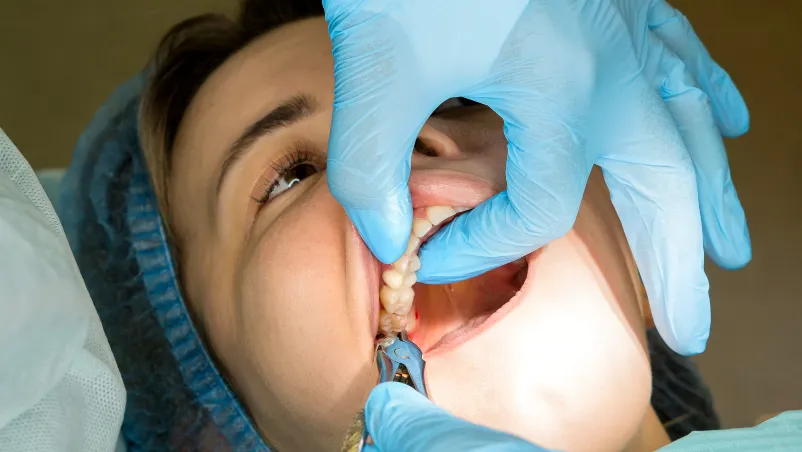
Wisdom teeth have a reputation that precedes them, most people expect swelling, pain, and days lost to recovery before they’ve even had the consultation.
If you’re researching wisdom teeth removal in Secunderabad because a dentist has flagged yours as a problem, here’s what the procedure, recovery, and cost factors actually look like, without the exaggerated version people tend to hear secondhand.
At Shenoy Hospitals, our Dental Surgery department in Secunderabad performs this procedure regularly, with a clear explanation of what to expect at every stage.
Key Takeaways
- Not every wisdom tooth needs removal, only those causing or likely to cause problems
- Simple extractions and impacted tooth removals differ significantly in complexity and recovery
- Most patients return to normal activity within a few days for straightforward cases
- Cost depends on impaction complexity, anesthesia type, and number of teeth involved
- Proper aftercare in the first 48 hours significantly affects how smooth recovery
Why Shenoy Hospitals
1963
Established Since 1963
Oldest nursing home
in Secunderabad
¼ Cost
corporate hospital bills
1L+
Babies Delivered
Successfully delivered
over 1 lakh babies
Why Do Wisdom Teeth Cause Problems in the First Place?
Wisdom teeth, or third molars, are the last teeth to emerge, usually in the late teens or early twenties, and most mouths simply don’t have room for them.
- When there’s insufficient space, wisdom teeth can grow at an angle, get stuck under the gum, or only partially emerge
- This is called impaction, and it’s the most common reason removal is recommended
- Even wisdom teeth that emerge fully can cause crowding, difficulty cleaning properly, or pressure on neighboring teeth
- Not every wisdom tooth causes problems, some grow in normally and never need removal
Is Wisdom Teeth Removal Necessary If It’s Not Causing Pain?
A question worth answering directly, since absence of pain doesn’t always mean absence of a problem: is wisdom teeth removal necessary if it’s not causing pain?
- Sometimes, yes. Impacted teeth can cause damage to neighboring teeth or create infection risk even without noticeable pain
- Your dentist typically evaluates position and impaction risk through an X-ray, not just symptoms you’re currently feeling
- If a wisdom tooth is positioned normally and causing no structural issues, removal isn’t automatically necessary
- The decision is based on individual evaluation, not a blanket rule that all wisdom teeth must come out
MedlinePlus, the NIH’s patient information service, notes that an impacted wisdom tooth that isn’t causing problems may need no treatment, while removal is the usual treatment when it does.
What Happens If You Don’t Remove an Impacted Wisdom Tooth?
Also worth understanding directly: what happens if you don’t remove an impacted wisdom tooth?
- Left untreated, an impacted tooth can lead to infection, cyst formation, or damage to the roots of adjacent teeth
- It can also contribute to crowding or shifting of nearby teeth over time
- Some cases remain stable for years without complication, which is why individual evaluation matters more than a fixed timeline
- Your dentist will typically recommend monitoring or removal based on the specific risk your case presents
What’s the Difference Between a Simple and Surgical Extraction?
This distinction affects both the procedure itself and your recovery timeline.
- A simple extraction applies to a wisdom tooth that’s fully erupted and visible, removed with local anesthesia in a straightforward procedure
- A surgical extraction is needed for impacted teeth, requiring a small incision and sometimes sectioning the tooth for removal
- Surgical extractions typically involve stitches and a longer recovery window than simple ones
- Your dentist determines which category applies based on the X-ray evaluation beforehand
- Your dentist determines which category applies based on the X-ray evaluation beforehand, and our guide to what to expect at a dental surgery consultation explains the exam and imaging that come first. Complex impacted teeth are also handled by our Maxillofacial Surgery team.
What Happens During the Procedure Itself?
Understanding the actual steps tends to ease most of the pre-procedure anxiety.
- The area is fully numbed with local anesthesia, or sedation is used for more complex or multiple-tooth cases
- For impacted teeth, a small incision is made and the tooth may be sectioned into pieces for easier removal
- Once removed, the site is cleaned and, if needed, stitched closed
- Most procedures, even surgical extractions, are completed within an hour, with same-day discharge
What Does Recovery Actually Look Like Day by Day?
Recovery varies by case, but there’s a fairly predictable pattern for straightforward extractions.
- First 24 hours: swelling and mild bleeding are common, rest and ice application help manage this
- Days 2 to 3: swelling typically peaks and then begins to subside, discomfort is usually manageable with prescribed pain relief
- Days 4 to 7: most patients feel significantly better and can resume normal activities, though full healing of the extraction site continues
- Beyond a week: for surgical extractions, complete soft tissue healing can take a couple of weeks, with bone healing continuing for months underneath
Can You Eat Normally the Day After Wisdom Tooth Removal?
A practical concern for most patients: can you eat normally the day after wisdom tooth removal?
- Not quite normally, soft foods are recommended for the first few days to avoid disturbing the extraction site
- Avoid hot liquids, straws, and hard or crunchy foods, all of which can dislodge the healing blood clot
- Most patients can gradually return to a regular diet within about a week, depending on how recovery is progressing
- Staying hydrated and eating enough, even with dietary restrictions, supports faster healing
What Should You Watch for During Recovery?
Most recoveries are uneventful, but a few signs are worth knowing.
- Mild swelling and discomfort are expected, worsening pain after the first few days is not
- Dry socket, when the healing blood clot dislodges too early, causes noticeable pain and needs prompt attention from your dentist
- Persistent bleeding beyond the first day, or signs of infection like fever or spreading swelling, should prompt a follow-up visit
- Most complications are avoidable by carefully following your dentist’s aftercare instructions
What Factors Affect the Cost of Wisdom Teeth Removal?
Since pricing varies by case, here’s what actually influences it rather than a fixed figure.
- Whether the extraction is simple or surgical, surgical cases involve more time and complexity
- The number of wisdom teeth being removed in a single visit
- Whether local anesthesia or sedation is used
- Any additional imaging or follow-up care required
At Shenoy Hospitals, our current dental surgery price estimates list surgical wisdom tooth extraction at ₹4,000–₹8,000, and our guide to dental surgery cost without insurance explains what changes the final amount. For an estimate specific to your case, call our Dental Surgery team on +91 7337277787, since impaction complexity varies from patient to patient.
Final Thoughts
Wisdom teeth removal has a reputation that’s often worse than the actual experience, particularly for straightforward cases handled with proper technique and aftercare.
Understanding whether your case is a simple or surgical extraction, following recovery guidance closely in the first 48 hours, and getting an individual evaluation rather than assuming the worst all make the process considerably more manageable than most people expect going in.
FAQs
- How long does it take to recover from wisdom teeth removal?
Simple extractions typically resolve within a week, while surgical extractions for impacted teeth may take one to two weeks for soft tissue healing.
- How much does wisdom tooth extraction cost in India?
Cost varies based on impaction complexity, number of teeth, and anesthesia type. It’s best to get an individual evaluation for an accurate estimate.
- Is wisdom teeth removal necessary if it’s not causing pain?
Not always. Some wisdom teeth grow in normally without issue, while others carry impaction risk even without current pain, evaluation determines which applies.
- What happens if you don’t remove an impacted wisdom tooth?
It can lead to infection, cyst formation, or damage to nearby teeth over time, though some cases remain stable for years without complication.
- Can you eat normally the day after wisdom tooth removal?
Not quite, soft foods are recommended for the first few days, with a gradual return to a normal diet over about a week.
- Is the procedure itself painful?
No, local anesthesia or sedation numbs the area fully during the procedure. Discomfort typically appears afterward and is manageable with medication.
- How many wisdom teeth are usually removed at once?
This varies by patient, some have all four removed in one visit, while others have them addressed individually based on need.
- What is dry socket, and how do I avoid it?
Dry socket occurs when the healing blood clot dislodges too early, causing pain. Avoiding straws, smoking, and vigorous rinsing in the first few days helps prevent it.
- Do I need someone to drive me home after the procedure?
If sedation is used, yes. For procedures under local anesthesia only, you may be able to drive yourself, though this depends on your specific case.
- When should I contact my dentist after the procedure?
If bleeding persists beyond the first day, pain worsens instead of improving, or you notice signs of infection like fever or spreading swelling.
Medical Disclosure
This article is for general informational purposes only and does not constitute medical advice. It is not a substitute for professional diagnosis or treatment. Please consult a qualified physician at Shenoy Hospitals or your own healthcare provider for advice specific to your condition.
Get in touch

Shenoy Hospitals Clinical Content Team
Shenoy Hospitals, Secunderabad. Our content team prepares and review by specialist Team.
CALL US FOR ANY HELP
GET IN TOUCH ON