The words “dental surgery” can make anyone nervous, especially when you don’t know what will happen at the first appointment.
A dental surgery consultation is usually about understanding the problem, examining your mouth, reviewing any necessary scans, and creating a safe treatment plan.
At Shenoy Hospitals, our dental and maxillofacial surgery team takes time to understand your concern before recommending a procedure.
Key Takeaways
- Your first visit usually focuses on diagnosis and treatment planning, not immediate surgery.
- Your dentist may examine your teeth, gums, jaw and the area causing symptoms.
- Digital X-rays or an OPG may be recommended when imaging is needed for treatment planning.
- Bring previous dental reports, X-rays, medicines and relevant medical information.
- You should leave the consultation knowing what treatment is recommended and what happens next.
Why Shenoy Hospitals
1963
Established Since 1963
Oldest nursing home
in Secunderabad
¼ Cost
corporate hospital bills
1L+
Babies Delivered
Successfully delivered
over 1 lakh babies
What happens during a dental surgery consultation?
A first dental surgery consultation usually involves a discussion of your concern, a clinical examination, appropriate imaging and treatment planning.
We first want to understand why you’ve come to see us. You may be dealing with tooth pain, an impacted wisdom tooth, a badly damaged tooth, swelling, tooth loss or another oral problem.
We then examine the affected area and assess your overall oral health. The purpose is to understand the cause of the problem before deciding whether surgery is actually needed.
A consultation doesn’t automatically mean you’ll have surgery that day. Some cases can be treated during the same visit, while others need further assessment or a separate procedure appointment.
Why do I need a consultation before dental surgery?
Dental surgery isn’t the same for every patient. The procedure recommended for an impacted wisdom tooth may be completely different from treatment for a damaged tooth, jaw cyst, or missing tooth.
A consultation allows the oral and maxillofacial surgeon to assess factors such as:
- Location and severity of the dental problem
- Condition of the surrounding teeth and bone
- Previous dental treatment
- Existing medical conditions
- Current medications
- Possible infection or inflammation
- Whether imaging is required
- Whether local anaesthesia, sedation, or another approach may be appropriate
This information helps the surgeon create an individualised treatment plan rather than recommending surgery based only on symptoms.
What will the dental surgeon ask me during my first visit?
We’ll ask about your symptoms, previous dental treatment, medical history and medicines you currently take.
Tell us when the pain or swelling started, whether it comes and goes, and whether eating, chewing or opening your mouth makes it worse.
We’ll also ask about previous dental procedures, allergies and health conditions such as diabetes or hypertension, which our guide to diabetes management in Secunderabad covers in more detail.
This information matters because some medical conditions and medicines can affect surgical planning, bleeding risk, healing or the choice of anaesthesia.
Will the dentist examine my teeth and gums?
Yes, a clinical examination is an important part of the first consultation.
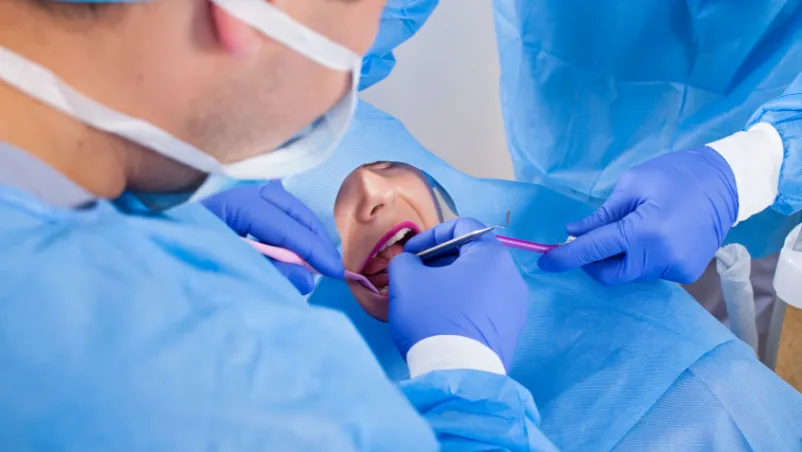
We may assess the teeth, gums, oral tissues and the specific area causing your symptoms. If your concern involves the jaw or facial structures, the examination may also include jaw movement and other relevant findings.
At Shenoy Hospitals, our dental surgery service includes clinical examination as part of diagnostic planning.
The examination helps us decide whether further tests are needed before recommending treatment.
Will I need a dental X-ray or OPG before surgery?
You may need a dental X-ray or OPG depending on the problem being assessed.
An OPG, or panoramic X-ray, gives us a broad view of the teeth and jaws. It can help us assess tooth roots, jawbone and surrounding structures when planning procedures such as wisdom tooth removal or dental implants.
At Shenoy Hospitals, digital X-rays and OPG are used when required for accurate treatment planning.
Not every patient needs the same scan. The imaging we recommend depends on your symptoms, examination findings and planned treatment.
What treatment options might be discussed?
The treatment plan depends on what we find during the examination and any required imaging.
Depending on your condition, we may discuss:
- Root canal treatment to treat infection inside a tooth while preserving it when possible.
- Simple or surgical extraction when a tooth cannot be saved or needs removal.
- Wisdom tooth removal for problematic or impacted wisdom teeth.
- Dental implants to replace missing teeth.
- Treatment for certain cysts, swellings or other oral conditions.
We don’t recommend surgery simply because a patient has pain. We first determine what is causing the problem and which treatment is appropriate, and as MedlinePlus, the U.S. National Library of Medicine’s health information service, notes, an impacted wisdom tooth that isn’t causing problems may not need treatment at all.
Can dental surgery be done on the first visit?
Sometimes, but it depends on your diagnosis, the complexity of the procedure and whether the necessary assessment has been completed.
A straightforward procedure may be possible when the clinical findings are clear and the required preparation has been completed.
For a more complex case, we may need additional imaging, medical assessment or treatment planning before scheduling surgery. A separate appointment can be the safer and more organised approach when the procedure needs careful preparation.
Don’t feel pressured to have a procedure simply because you’re already in the dental chair. You should understand the diagnosis and treatment plan before proceeding.
What should I bring to my dental consultation?
Bring anything that can help us understand your dental and medical history.
If available, bring:
- Previous dental X-rays or scans
- Dental reports
- Referral notes
- List of medicines you currently take
- Information about drug allergies
- Relevant medical records
If another dentist has referred you for oral surgery, bring the referral information and previous imaging if you have it.
You don’t need to worry if you don’t have every document. We can assess what information is available and advise you about any additional records we need.
What should I ask the dental surgeon before treatment?
You should feel comfortable asking questions before agreeing to a procedure.
Useful questions include:
- What is causing my dental problem?
- Do I definitely need surgery?
- Can my tooth be saved?
- What treatment options do I have?
- Will I need an X-ray or OPG?
- What type of anaesthesia will be used?
- Will I need another appointment for the procedure?
- What will recovery involve?
- What will the treatment cost?
For a realistic idea of what to expect, our guide to dental surgery cost without insurance lists estimated price ranges for common procedures.
A good consultation should leave you with a clear understanding of what is happening and what your next step is.
What happens after the consultation?
After the examination and investigations, we’ll explain the findings and recommend the next step.
If treatment is needed, we may discuss the procedure, expected recovery, anesthesia, follow-up and other practical details.
For complex treatment, you may need another appointment before the procedure. This gives our team time to prepare properly and gives you time to understand your treatment plan.
For procedures such as wisdom tooth removal or dental implants, planning may include reviewing the position of the tooth, available bone and surrounding structures.
When should I book a dental surgery consultation?
Book a dental assessment if a tooth problem isn’t settling, keeps returning or is affecting eating, speaking or daily life.
You should also seek dental assessment for:
- Persistent tooth pain
- Facial or jaw swelling
- An impacted or repeatedly infected wisdom tooth
- A severely broken or damaged tooth
- A missing tooth requiring implant assessment
- A persistent swelling or lump in the mouth
- Jaw pain or difficulty moving the jaw
A swelling, lump or ulcer in the mouth that doesn’t heal should be checked promptly, because it can occasionally be an early sign of oral cancer, as covered in our guide to cancer screening packages in Secunderabad.
Don’t wait for pain to become severe before getting an assessment. Early evaluation can clarify whether you need surgery or a simpler form of dental treatment.
How does Shenoy Hospitals approach dental surgery consultations?
At Shenoy Hospitals, our Department of Dental and Maxillofacial Surgery combines clinical examination, digital dental imaging and personalised treatment planning. Our team manages procedures including surgical extractions, wisdom tooth removal, dental implants, root canal treatment and selected oral surgical conditions.
Our specialist team includes Dr. Sukhvinder Bindra, BDS, MDS in Oral & Maxillofacial Surgery, who has expertise in dental implants, facial trauma, jaw cysts and other oral and maxillofacial conditions.
We also understand that dental treatment can cause anxiety. Our approach is to explain the process clearly and help you make a treatment decision without unnecessary pressure.
Book your dental surgery consultation in Secunderabad
If you’re dealing with persistent tooth pain, an impacted wisdom tooth, a damaged tooth, missing teeth or another oral surgical concern, our Dental and Maxillofacial Surgery department at Shenoy Hospitals, Secunderabad can assess your condition and explain the appropriate treatment options. You can book a consultation through the official Shenoy Hospitals appointment service.
Final Thoughts
Your first dental surgery consultation should give you clarity, not more confusion.
You should understand what’s causing the problem, whether surgery is necessary, what options are available and what needs to happen next.
If you’re feeling anxious, tell us. Knowing what to expect and asking questions before treatment can make the entire dental experience easier to manage.
Frequently Asked Questions
1.Do I need a referral to see an oral and maxillofacial surgeon?
No, not always. You can seek a specialist consultation directly for many dental and oral surgical concerns, although a referral from your regular dentist can be useful when previous treatment or imaging is available.
2.Should I eat before a dental surgery consultation?
Yes, unless you’ve been given specific instructions not to eat or drink. A routine consultation usually doesn’t require fasting, but instructions may differ if a procedure or sedation is planned.
3.Can I bring someone with me to my dental consultation?
Yes. You can bring a family member or trusted person if it makes you more comfortable, especially when discussing a complex treatment plan.
4.Will I get a treatment estimate during the first visit?
You may receive an estimated treatment plan after your examination and required investigations. The final cost can depend on the exact procedure and its complexity.
5.Can I get a second opinion before dental surgery?
Yes. A second opinion is reasonable when you’re unsure about a major or irreversible procedure. Take your X-rays and reports with you so the second clinician can review the same information.
6.What if my dental pain stops before my appointment?
You should still attend if the problem was persistent or recurrent. Pain stopping doesn’t always mean the underlying dental problem has resolved, particularly when infection or nerve damage is involved.
7.Can I ask the dentist to explain my X-ray?
Yes. You should ask your dentist to explain any important finding on your X-ray in simple language. Understanding the image can help you understand why a particular treatment is being recommended.
8.Is dental surgery always done under general anaesthesia?
No. Many dental surgical procedures can be performed under local anaesthesia, which numbs the treatment area while you remain awake. More complex cases may require other anaesthesia or sedation arrangements depending on the procedure.
9.How do I know whether I need a dentist or an oral surgeon?
A dentist can manage many routine dental problems, while an oral and maxillofacial surgeon is trained to manage surgical conditions involving the teeth, jaws, mouth and facial structures. Your dentist can also refer you when specialist surgical care is appropriate.
10.Can dental surgery treat a swollen jaw or facial swelling?
Sometimes, but the cause of the swelling must be diagnosed first. It may be related to dental infection, an impacted tooth, cyst or another condition, so examination and appropriate imaging are important before treatment.
Medical Disclosure
This article is intended for general educational information and does not replace an examination, diagnosis or personalised treatment advice from a qualified dental professional. The appropriate investigation, treatment, anaesthesia and timing of dental surgery vary according to the patient’s condition, medical history and clinical findings.
Get in touch

Shenoy Hospitals Clinical Content Team
Shenoy Hospitals, Secunderabad. Our content team prepares and review by specialist Team.
CALL US FOR ANY HELP
GET IN TOUCH ON