
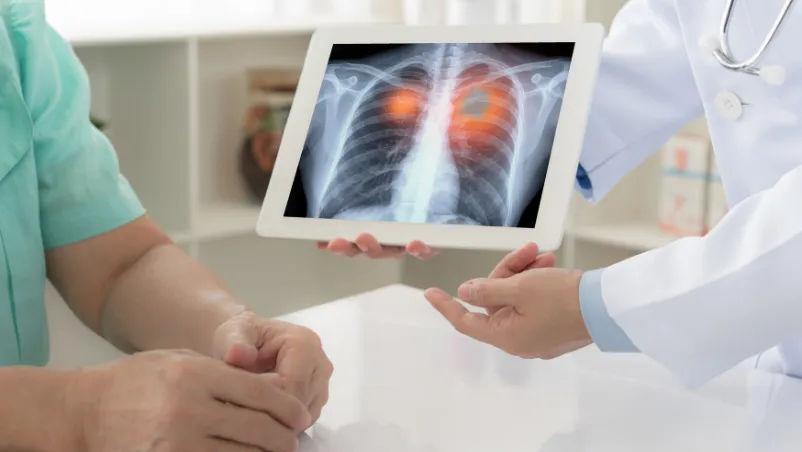
Finding a lung nodule on a CT scan can be frightening, especially when you are worried about cancer.
The reassuring news is that many lung nodules are non-cancerous and may develop because of an old infection, inflammation or scar tissue. However, the finding should not be ignored.
At Shenoy Hospitals, Secunderabad, we encourage patients to understand their scan reports and follow the medical advice recommended for their individual condition.
Key Takeaways
- A lung nodule does not automatically mean cancer.
- Previous infections, inflammation and scar tissue can cause non-cancerous nodules.
- The nodule’s size, shape, density and growth help doctors assess its risk.
- Some nodules need only follow-up imaging, while others require further tests.
- Do not skip recommended follow-up, even if you feel healthy.
Why Shenoy Hospitals
1963
Established Since 1963
Oldest nursing home
in Secunderabad
¼ Cost
corporate hospital bills
1L+
Babies Delivered
Successfully delivered
over 1 lakh babies
What Is a Lung Nodule?
A lung nodule is a small area of tissue in the lung that looks different from the surrounding lung tissue on an imaging scan. Doctors may also call it a pulmonary nodule.
These nodules are often discovered unexpectedly during a CT scan or chest X-ray performed for another reason. Many people have no symptoms when a nodule is found.
A nodule is a description of an imaging finding, not a final diagnosis. It may be harmless, but some nodules need further investigation to identify their cause.
Your doctor will review the scan report, your medical history and any previous chest scans before deciding what should happen next.
Does a Lung Nodule Mean Cancer?
No, finding a lung nodule does not automatically mean you have cancer. Many nodules are benign, meaning they are not cancerous, and MedlinePlus, the U.S. National Library of Medicine’s health information service, notes that more than half of solitary pulmonary nodules are noncancerous.
Possible causes include:
- Previous lung infections: An old infection may leave a small area of scar tissue.
- Inflammation: Certain inflammatory conditions can cause small areas of abnormal tissue.
- Granulomas: These are small collections of inflammatory cells that can develop in response to some infections or other triggers.
- Benign growths: Some nodules are non-cancerous tissue growths.
In some cases, a nodule may represent lung cancer or, in someone with a previous cancer diagnosis, cancer that has spread from another part of the body.
This is why you should not assume the worst after reading your report. Equally, you should not assume the nodule is harmless without appropriate medical assessment.
What Makes a Lung Nodule More Concerning?
Doctors consider several features when deciding whether a nodule needs monitoring or further testing.
|
Feature |
What it can tell your doctor |
|
Size |
Larger nodules may need closer assessment, but size alone cannot confirm or exclude cancer. |
|
Shape and edges |
Irregular or spiky edges can raise concern, although appearance alone is not diagnostic. |
|
Density |
Solid, partly solid and ground-glass nodules may need different follow-up approaches. |
|
Growth |
Changes in size or appearance on previous scans may influence the next steps. |
|
Number |
One or multiple nodules can occur in both benign and serious conditions. |
Your personal risk factors also matter. These may include your age, smoking history, previous cancer and certain occupational exposures.
No single feature can determine whether a nodule is cancerous. Your doctor needs to consider the complete picture.
What Symptoms Can a Lung Nodule Cause?
Most small lung nodules do not cause noticeable symptoms. Many people discover them during imaging for an unrelated health concern.
When symptoms occur, they may be caused by the underlying lung condition rather than the nodule itself.
Possible symptoms include:
- A persistent or changing cough
- Coughing up blood
- Unexplained weight loss
- Persistent chest discomfort
- Shortness of breath
- Repeated respiratory infections
These symptoms can have several causes and do not automatically mean cancer. A cough that lasts for weeks deserves its own evaluation, which we explain in why a cough won’t go away after weeks of medication. However, persistent or worsening symptoms should be medically evaluated.
Seek urgent medical attention if you cough up a significant amount of blood or develop severe or sudden difficulty breathing.
What Should I Do After a Lung Nodule Is Found?
The first step is to discuss the complete CT report with your doctor. Not every nodule requires an immediate procedure or treatment.
Your doctor may:
- Review the scan report and images.
- Check whether you have had previous chest imaging.
- Ask about your symptoms, smoking history and medical background.
- Assess the nodule’s size, appearance and estimated risk.
- Recommend monitoring or additional investigations if needed.
Bring previous CT scans or chest X-rays to your appointment if they are available. Comparing old and new images can help determine whether the nodule is new, has changed or has remained stable.
If your report recommends further assessment, arrange it within the advised timeframe. Feeling well does not necessarily mean follow-up is unnecessary.
Will I Need Another CT Scan?
Not every nodule needs immediate testing. Depending on its characteristics and your risk factors, your doctor may recommend a follow-up CT scan after an appropriate interval.
The purpose is to check whether the nodule changes in size or appearance. Some nodules remain stable, while others may require closer investigation.
The recommended timing depends on factors such as:
- The size and density of the nodule
- Its appearance on the scan
- Whether previous scans show any changes
- Your age and smoking history
- A history of cancer or other relevant medical conditions
There is no single follow-up schedule suitable for everyone. Your doctor will explain when another scan is appropriate and whether additional tests are needed.
What Other Tests Might Be Required?
If the nodule has features that need closer evaluation, your doctor may recommend further investigations. These tests are not necessary for every patient.
- PET-CT scan
A PET-CT scan combines information about tissue activity with detailed imaging. It can help assess selected nodules, but inflammation and infection may also cause abnormal results. A PET-CT scan alone cannot confirm cancer.
- Lung biopsy
A lung biopsy involves collecting a small tissue sample for examination. Depending on the nodule’s location, a sample may be obtained using a needle through the chest wall or through a bronchoscope, a thin instrument passed into the airways.
Our guide to what happens during a bronchoscopy and whether it hurts explains what to expect.
A biopsy may be recommended when the benefits of obtaining a tissue diagnosis outweigh the risks. It is not automatically required for every nodule.
- Additional imaging or investigations
Your doctor may suggest other tests depending on the scan findings, your symptoms and the possible causes.
The aim is to select the appropriate investigation rather than perform every available test.
Can a Lung Nodule Disappear on Its Own?
Some nodules associated with temporary inflammation or infection may become smaller or disappear as the underlying condition resolves. Other nodules, including those caused by scar tissue, may remain visible for years.
A nodule becoming smaller can be reassuring, but its significance depends on the cause. Similarly, a stable nodule may be less concerning in some circumstances, but stability must be interpreted according to its type and the duration of follow-up.
Do not start medicines or home remedies to make a nodule disappear without understanding its cause. Follow your doctor’s recommended plan.
Does Smoking Increase the Risk of Lung Cancer?
Yes. Smoking is an important risk factor for lung cancer and may affect how your doctor assesses a nodule.
Other factors, including older age, previous cancer and certain occupational exposures, may also influence the assessment.
If you smoke, quitting can help protect your lung health. Your doctor can guide you towards appropriate smoking-cessation support.
For some people with a significant smoking history, lung cancer screening may also be recommended, and our guide to cancer screening packages in Secunderabad explains how screening works.
However, people who have never smoked can also develop lung nodules. Smoking history is only one part of the assessment, and it cannot establish whether an individual nodule is cancerous.
What Questions Should I Ask My Doctor?
It is normal to feel anxious when you see an unexpected finding on a scan. Preparing a few questions can help you understand what the report means.
Consider asking:
- How large is the nodule?
- Does its appearance raise any concerns?
- Is it possible to compare it with an older scan?
- Do I need another CT scan or any additional tests?
- When should I arrange my next appointment?
- Which symptoms should prompt an earlier review?
Ask your doctor to explain any unfamiliar medical terms. If follow-up imaging is recommended, confirm when it should happen and who will review the results.
When Should I See a Lung Specialist?
Arrange a medical review after a nodule is identified, particularly if the report recommends further assessment. A pulmonologist, a doctor who specialises in lung and respiratory conditions, may be involved depending on the findings.
You can see what our Pulmonology Department covers before you book.
More prompt assessment may be needed if the nodule is growing, has suspicious features or is associated with concerning symptoms. Your medical history can also affect the urgency of evaluation.
A finding that requires investigation is not the same as a confirmed cancer diagnosis. The purpose of specialist assessment is to understand the risk and determine the appropriate next step.
If you are unsure how to interpret the report, seek medical advice instead of trying to diagnose yourself from a single phrase.
Where Can I Get Medical Guidance for a Lung Nodule?
At Shenoy Hospitals, Secunderabad, our medical team can help patients understand abnormal imaging findings and identify appropriate next steps. Contact the hospital to confirm the availability of a pulmonology consultation and bring your CT report and previous imaging, if available, to your appointment.
Conclusion
A lung nodule can sound alarming, but it does not automatically mean cancer. Many nodules are associated with non-cancerous conditions. The right approach is to review the scan findings, consider your personal risk factors and follow the recommended monitoring or investigations.
Do not panic, but do not ignore the report. Timely medical review can help you understand what the finding means and whether further action is necessary.
Frequently Asked Questions
1. Are most lung nodules cancerous?
Many lung nodules are benign and may result from previous infections, inflammation or scar tissue. The risk depends on the scan findings and your medical history.
2. Can a small lung nodule be cancerous?
Yes, although smaller nodules are generally less concerning than larger ones. Size alone cannot rule cancer in or out, so follow your doctor’s advice.
3. Does every lung nodule need a biopsy?
No. Many nodules can be monitored with imaging, while selected cases need additional testing or a biopsy. The decision depends on the nodule’s features and your risk factors.
4. How often should a lung nodule be checked?
There is no universal schedule. The follow-up interval depends on its size, density, appearance, changes over time and your medical history.
5. Can a lung nodule cause a cough?
Most nodules do not cause symptoms. A persistent cough may be related to another lung condition and should be assessed by a healthcare professional.
6. Can a lung nodule disappear without treatment?
Some nodules associated with temporary inflammation or infection may shrink or disappear. Others may remain visible, so follow-up depends on the likely cause.
7. Are multiple lung nodules more dangerous than one?
Not necessarily. Multiple nodules can occur in both benign and serious conditions. Doctors assess their appearance and distribution along with your medical history.
8. Should I worry if I have never smoked?
A lung nodule can occur in someone who has never smoked, and many nodules are benign. Your doctor will consider the scan findings and other risk factors.
9. What does a ground-glass lung nodule mean?
A ground-glass nodule is a hazy area seen on a CT scan. It can have several causes, and its size, appearance and changes over time help guide follow-up.
10. What should I do if my CT report recommends follow-up?
Arrange the recommended appointment or scan within the advised timeframe. Keep your previous imaging reports and do not skip follow-up simply because you feel well.
Medical Disclosure
This article is for general educational purposes and does not replace an individual medical consultation, examination, diagnosis or personalised treatment plan. A lung nodule must be assessed by a qualified healthcare professional in the context of the scan images, medical history and relevant risk factors. Follow the recommendations of your treating doctor.
Get in touch

Shenoy Hospitals Clinical Content Team
Shenoy Hospitals, Secunderabad. Our content team prepares and review by specialist Team.
CALL US FOR ANY HELP
GET IN TOUCH ON