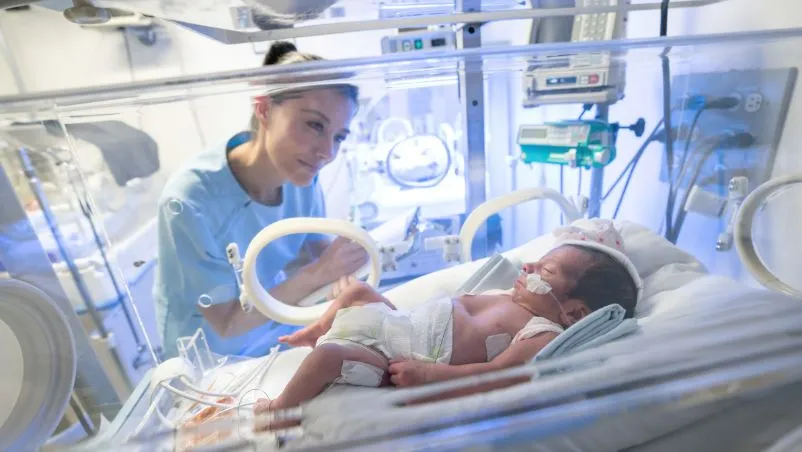
You watched a nurse take blood from your baby’s heel. Your tiny baby flinched, their face creased, and a sound came out that broke something in you.
Yes, your baby felt that. And modern neonatal science is not only clear on this, it has fundamentally changed how good NICUs manage pain today.
For families navigating newborn baby pain management in Secunderabad, Shenoy Hospitals integrates evidence-based pain assessment and relief into every aspect of its neonatal intensive care program.
Key Takeaways:
- The science behind why NICU babies , including premature ones , feel pain
- How nurses assess pain in babies who cannot speak
- What non-drug methods reduce pain during procedures
- How repeated untreated pain affects long-term brain development
- Exactly how parents can actively help reduce their baby’s pain experience
Why Shenoy Hospitals
1963
Established Since 1963
Oldest nursing home
in Secunderabad
¼ Cost
corporate hospital bills
1L+
Babies Delivered
Successfully delivered
over 1 lakh babies
Do Babies in the NICU Actually Feel Pain?
Yes, definitively, unambiguously, yes. This is no longer a matter of scientific debate.
- The Historical Misconception , And When It Changed
For most of the twentieth century, medical practice operated on the assumption that newborns , particularly premature ones , did not have a sufficiently developed nervous system to experience pain in a meaningful way.
Surgeries were performed on newborns with minimal or no anaesthesia. Procedures were done without analgesics. The belief was that immature brains could not process pain.
This was wrong. A landmark study by Anand and Hickey, published in the New England Journal of Medicine in 1987, demonstrated that newborns undergoing cardiac surgery with adequate anaesthesia had significantly better outcomes , lower stress hormone responses, fewer complications, improved survival , than those operated on without it.
That study changed neonatal practice globally. Newborn pain became a clinical and ethical priority from which medicine has not retreated.
- The Neuroscience of Neonatal Pain
The neural architecture required for pain experience, sensory receptors, spinal cord pain pathways, and thalamic connections to the cortex, is present and functional from approximately 24 weeks of gestation.
By the time a baby is in a NICU, they have the neurological capacity to receive, transmit, and process pain signals. This is an established fact, supported by brain imaging studies showing cortical activation in response to painful stimuli in preterm infants.
- Why Premature Babies May Feel Pain More Intensely
This is the finding that surprises most people , and that most competitor content gets wrong or ignores.
Pain processing involves two types of pathways: excitatory pathways (that amplify pain signals) and inhibitory pathways (that dampen them).
Excitatory pain pathways develop earlier in gestation than inhibitory ones.
A premature baby has fully functional pain amplification without the corresponding pain-dampening mechanisms that develop later. The result is that a premature baby may experience greater pain intensity from the same stimulus than a full-term baby or an adult.
This is not a reason to be more frightened , it is a reason to take neonatal pain management more seriously, which is exactly what good NICU programs now do.
How Many Painful Procedures Does a NICU Baby Go Through?
The number is higher than most parents , and many outside the specialty realize.
- The Documented Procedure Burden
A landmark study published in the journal Pain in 2008 followed premature infants in NICUs across multiple centres and found that babies underwent an average of 10–16 skin-breaking procedures per day in the first two weeks of life.
Over a 4-week NICU stay, a premature baby may experience over 300 individual painful procedures , heel pricks, IV insertions, blood draws, intubation attempts, tape removal, eye examinations, and more.
For families trying to understand what a NICU stay involves practically and financially, our guide on NICU care costs for premature babies in Secunderabad explains how the level of care, duration, and intervention complexity all affect the overall picture.
This number is not shared to alarm parents. It is shared to explain why neonatal pain management is not a minor consideration; it is a core clinical obligation.
- The Most Common Painful Procedures
Heel pricks for blood sampling are the most frequent. Intravenous cannula insertion for medications and fluids, nasogastric tube placement, tracheal suctioning in ventilated babies, and eye examinations for retinopathy of prematurity are among the most consistently reported painful experiences in NICU babies.
Even adhesive tape removal , used to secure lines, tubes, and monitoring leads , causes measurable pain responses in neonates whose skin is fragile and whose pain thresholds are low.
- Necessary vs Unnecessary Pain
Every painful procedure performed in the NICU has a clinical justification. Blood tests monitor for dangerous conditions. Line insertions enable life-saving medications.
The goal of neonatal pain management is not to eliminate all procedures , it is to ensure that every procedure is performed with the best available pain relief, that unnecessary procedures are minimised, and that the cumulative pain burden is taken seriously as a clinical priority.
What Does Pain Look Like in a Newborn? How Do Nurses Know?
A baby in the NICU cannot say “that hurts.” Pain assessment in neonates is a skilled clinical process based on observable responses.
- Behavioural Pain Cues Parents Can Recognise
Facial expression is the most sensitive indicator. A pain grimace in a newborn includes brow bulging, eye squeeze, nasolabial furrow (the fold between nose and mouth deepening), and open or quivering lips.
Crying is an obvious indicator when present , but premature or intubated babies often cannot cry. Body movements including limb withdrawal, finger splaying, and arching of the back also signal pain or distress.
As a parent, learning to read your baby’s facial pain cues gives you a tool to identify when a procedure is causing significant distress , and when to ask the team what pain relief is being provided.
- Physiological Pain Indicators
Heart rate increase, oxygen saturation drop, and blood pressure rise are measurable physiological responses to pain that NICU monitors capture in real time.
These parameters are not specific to pain alone , they can also reflect handling, noise, or other stressors , but they contribute to the overall pain assessment picture.
- Validated Neonatal Pain Scales
Nurses and doctors use standardized scoring tools to assess neonatal pain consistently. The most commonly used include:
NIPS (Neonatal Infant Pain Scale) assesses facial expression, cry, breathing pattern, arm and leg position, and state of arousal. Scores range from 0 to 7, with higher scores indicating greater pain.
PIPP (Premature Infant Pain Profile) incorporates gestational age and behavioural state at the time of the procedure, making it particularly appropriate for premature babies.
CRIES , used primarily for postoperative pain assessment, incorporating Crying, Requirement for oxygen, Increased vital signs, Expression, and Sleeplessness.
These tools exist because subjectivity leads to undertreated pain. A score-based system creates accountability and consistency across shifts and between staff members.
Does Repeated Pain in the NICU Affect Brain Development?
The answer from the research is yes , and this is one of the most important reasons good NICU pain management matters beyond the immediate moment.
- What the Research Shows?
Studies using advanced brain imaging , specifically MRI diffusion tensor imaging , have found that premature infants who experienced greater numbers of painful procedures in the NICU showed reduced brain volume in specific regions important for cognition and emotion regulation, compared to those who experienced fewer painful procedures with better pain management.
Research published in Pain and Neonatology journals consistently shows that higher cumulative pain exposure in the NICU is associated with altered pain sensitivity later in life , meaning the nervous system recalibrates based on early pain experience.
- Pain and Stress Sensitisation
The immature brain is highly plastic , it wires itself based on experience. Repeated unmanaged pain during a critical developmental window shapes how pain pathways are organized.
Some children who experienced significant NICU pain burden show heightened pain responses to minor stimuli at preschool age. Others show differences in stress reactivity and emotional regulation.
This is not inevitable; it is what happens when pain is not well managed. Adequate pain management during the NICU stay mitigates these long-term effects significantly.
- Why This Drives Clinical Urgency?
Neonatal pain is not just a moment-to-moment comfort issue. It is a developmental medicine issue.
The cumulative impact of hundreds of undertreated painful procedures on a developing brain is a legitimate long-term health concern , which is why organisations including the International Association for the Study of Pain (IASP) and the European Foundation for the Care of Newborn Infants (EFCNI) have issued formal positions on the obligation to treat neonatal pain.
What Non-Drug Methods Do Hospitals Use to Reduce NICU Pain?
Non-pharmacological pain relief is the foundation of neonatal pain management , used for virtually every minor procedure, often more effectively than expected.
- Oral Sucrose, The Most Studied Intervention
Oral sucrose , a small amount of sugar solution given by syringe or on a pacifier approximately 2 minutes before a painful procedure, is the most extensively studied non-pharmacological analgesic in neonatal medicine.
A Cochrane systematic review of over 100 trials confirms that sucrose reduces pain scores during heel pricks, IV insertions, and other minor procedures. It is safe, inexpensive, and effective, with analgesic effects lasting approximately 5–8 minutes.
The mechanism is thought to involve endogenous opioid release triggered by sweet taste stimulation. This is not giving a baby sugar as a distraction. It is a physiologically active analgesic intervention.
- Non-Nutritive Sucking, Pacifiers During Procedures
Allowing a baby to suck on a pacifier during a painful procedure activates opioid and serotonin pathways that reduce pain perception.
It is most effective when combined with sucrose; the combination produces greater pain reduction than either alone. Most NICU guidelines now recommend the combination of sucrose plus non-nutritive sucking as standard for minor procedures.
- Skin-to-Skin Contact as Pain Relief
This is a direct clinical role for parents, not just comfort.
Multiple studies demonstrate that holding a baby skin-to-skin during or immediately before a painful procedure significantly reduces pain scores, heart rate response, and crying duration compared to the same procedure performed in an incubator.
A 2017 meta-analysis in BMJ Open confirmed that skin-to-skin contact during heel prick was associated with significantly lower PIPP pain scores.
Parents who participate in skin-to-skin during procedures are providing a measurable analgesic benefit to their baby. Ask your NICU team whether this is possible for your baby’s routine procedures.
- Facilitated Tucking and Swaddling
Facilitated tucking involves a nurse or parent holding the baby’s limbs gently flexed toward the midline during a procedure, mimicking the contained position of the womb.
This postural support reduces the physiological stress response and pain scores during minor procedures. It requires no equipment or medication and can be provided by a parent with guidance.
- Reducing Environmental Stressors
Bright light and loud noise are not painful in themselves, but they lower the threshold at which subsequent painful stimuli are felt.
Good NICU design and nursing practice includes dimming lights during procedures, minimizing unnecessary noise, clustering care interventions to allow rest periods, and handling babies with slow, deliberate movements.
Developmental care , organizing the NICU environment to support neurodevelopment rather than simply managing acute illness, is now a core component of evidence-based neonatal care.
If you are a parent at Shenoy Hospitals in Secunderabad and want to understand how premature baby pain during procedures is managed for your baby specifically, ask your neonatal nurse about the pain management protocol used for each procedure. Shenoy Hospitals‘ newborn baby care in Secunderabad operates as a modular, family-centered unit where developmental care and non-pharmacological pain management are integrated into every routine procedure and not treated as optional additions.
What Medications Are Used for Pain in the NICU?
For procedures beyond the scope of non-pharmacological measures, several medication options are available, each with specific indications and careful dosing.
- Topical Anaesthesia , EMLA Cream
EMLA cream (a mixture of lidocaine and prilocaine) can be applied to the skin approximately 60 minutes before a procedure to numb the area.
It is effective for IV cannula insertion and some blood draws but requires sufficient advance planning and is not appropriate for every situation. It is used less commonly in premature babies due to absorption concerns in very thin skin.
- Opioids in Neonatal Care
Morphine and fentanyl are used for post-surgical pain, during mechanical ventilation, and for procedures causing significant pain that non-pharmacological measures cannot adequately address.
Opioids in neonates are used at carefully calculated doses with continuous monitoring , not avoided simply because the patient is small. Undertreating pain is not safer than treating it. Modern neonatal pharmacology has established safe dosing protocols for these medications.
- Paracetamol in Neonates
Intravenous paracetamol is increasingly used in neonatal pain management for moderate pain and as an opioid-sparing agent , allowing lower opioid doses to be used.
Its safety profile in term and near-term infants is well established. Use in very premature babies is approached with more caution given immature liver metabolism.
- Sedation for Procedures
Midazolam or chloral hydrate may be used for sedation during longer or more complex procedures.
Sedation and analgesia are not the same thing. A sedated baby may not appear distressed but may still be experiencing pain. Good practice ensures that procedural sedation is accompanied by adequate analgesia , not used as a substitute for it.
How Can Parents Actively Help Reduce Their Baby’s Pain in the NICU?
Parents are not passive observers of their baby’s NICU experience. They are active participants in pain management, and this role is clinically validated.
- Skin-to-Skin During Procedures: Ask for It
Ask your NICU team whether you can hold your baby skin-to-skin during routine procedures such as heel pricks.
Many NICUs actively encourage this. Some may need prompting. The evidence supports it. You have the right to ask. If there is a clinical reason skin-to-skin is not possible for a specific procedure, ask what alternative comfort measures are being used.
- Breastfeeding and Breastmilk as Analgesia
Breastfeeding during minor procedures is a validated analgesic intervention. A Cochrane review confirms that breastfeeding reduces pain responses during heel prick blood sampling in term newborns, with lower pain scores compared to no intervention.
For babies who cannot yet breastfeed directly, a small amount of expressed breastmilk given orally before a procedure provides a similar benefit through sweet taste and bioactive compounds.
Maintaining your milk supply through regular expressing is, therefore, doubly important in the NICU, both for pain relief during procedures and for the nutritional role it plays in your baby’s weight gain and recovery.
Our guide on newborn weight loss after birth covers what normal weight trajectories look like and when feeding assessment becomes urgent, which is useful context for NICU parents managing the tube-to-oral feeding transition.
This is a specific, evidence-based role that only you as the mother can provide. Ask your team whether breastfeeding or breastmilk administration is possible before your baby’s next blood test.
- How to Ask the Team About Pain Management
You do not need medical training to ask these questions. Here is the language you can use:
“What pain relief will my baby have for this procedure?”
“Is sucrose being used before the heel prick?”
“Can I hold my baby during this?”
“How will you know if my baby is in pain, and what will you do about it?”
A good NICU team will welcome these questions. They reflect engaged parenting and support better care for your baby.
Final Thoughts
Your baby feels pain. That truth, once denied, now undeniable, is the foundation of modern neonatal care.
The good news is that neonatal pain management has advanced enormously. Sucrose, skin-to-skin, facilitated tucking, careful medication protocols, and developmental care environments combine to reduce the pain burden that NICU babies carry.
The better news is that you are not powerless in this. Holding your baby, offering breastmilk, asking about pain protocols, and being present during procedures are not small things. They are clinically meaningful contributions to your baby’s comfort and development.
Ask questions. Be present. Your involvement matters, not just emotionally, but medically.
FAQs
Does a heel prick hurt a newborn baby?
Yes , heel prick blood sampling is a painful procedure and newborns show measurable pain responses including facial grimacing, heart rate increase, and crying. Good NICUs use oral sucrose given 2 minutes before the procedure, combined with non-nutritive sucking on a pacifier, to significantly reduce pain during heel pricks. Skin-to-skin holding during the procedure also reduces pain scores measurably.
What pain relief is safe for newborns in the NICU?
Several pain relief options are safe and evidence-based for newborns: oral sucrose for minor procedures, non-nutritive sucking (pacifier), skin-to-skin contact, facilitated tucking, and for more significant pain, carefully dosed paracetamol, morphine, or fentanyl under medical supervision. The choice depends on the type and severity of pain and the baby’s gestational age and clinical status.
Does repeated pain in the NICU affect my baby’s development?
Research shows that high cumulative painful procedure exposure in the NICU without adequate pain management is associated with altered pain sensitivity and small differences in brain structure on imaging. However, adequate pain management significantly mitigates these effects. This is one of the strongest reasons modern NICUs prioritise pain relief for even minor procedures rather than treating pain management as optional.
Can I be with my baby during painful procedures in the NICU?
In many NICUs, yes , and parental presence including skin-to-skin holding during minor procedures is actively supported because it provides measurable pain relief. Ask your NICU team specifically about their policy for parental presence during heel pricks and blood draws. If no policy exists, ask whether it can be discussed , you are within your rights to make this request.
How do I know if my NICU baby is in pain right now?
Look for these signs: brow furrowing and eye squeezing, deepening of the fold between nose and mouth, quivering or open mouth, limb withdrawal or stiffening, and finger splaying. These are behavioural pain cues that are present even in premature and intubated babies who cannot cry audibly. If you observe these signs outside of a procedure, inform the nursing team , they can assess with a validated pain score and respond appropriately.